

Blog
API Integration Services: Complete Enterprise Guide
- December 16, 2025
- Pranavi Dharma
In today’s digital economy, enterprises no longer operate on a single system or platform. Business applications span cloud, on-premises, SaaS, legacy systems, partner ecosystems, and customer-facing digital channels. While this technological diversity enables innovation, it also introduces complexity, making API integration services essential to seamlessly connect systems, streamline data flow, and ensure efficient enterprise operations.
The real challenge organisations face is not the lack of systems — it is the lack of connectivity between them.
For larger organizations, enterprise API integration strategy plays a critical role. APIs are no longer just technical connectors; they are strategic enablers that help enterprises scale, automate, and innovate with confidence.
In this guide, we cover:
- What API integration services are and how they work
- Why traditional integration approaches are failing enterprises
- The API-led connectivity model explained
- Real industry use cases and business benefits
- Best practices for choosing the right integration approach
- How Prowesssoft helps enterprises integrate at scale
The Growing Need for API Integration Services
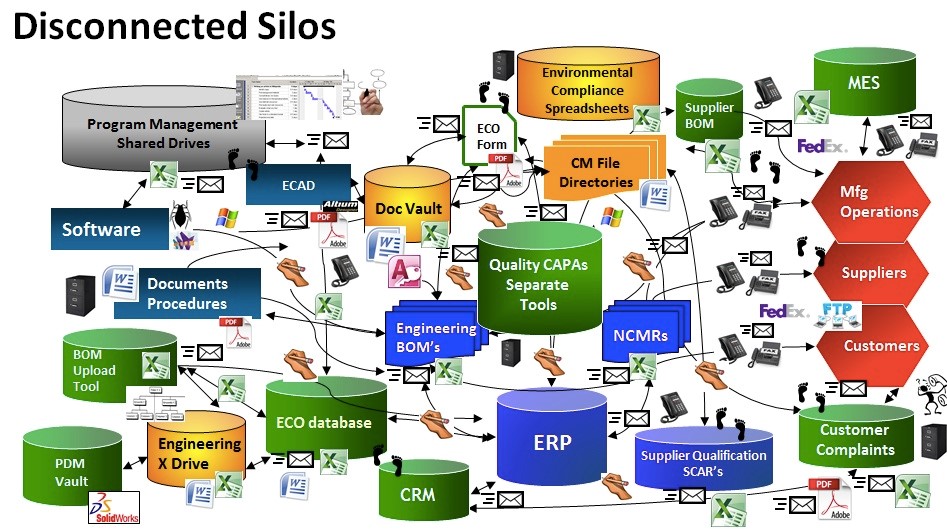
Modern enterprises rely on dozens — sometimes hundreds — of applications to run daily operations. CRM, ERP, HR, finance, supply chain, analytics, and customer experience platforms all generate valuable data. When these systems operate in silos, businesses face:
- Fragmented data and limited visibility across departments
- Manual processes and operational inefficiencies that slow teams down
- Slow response to market and customer demands due to disconnected systems
- High IT maintenance costs from point-to-point integrations
- Inconsistent customer and partner experiences caused by data mismatches
Without a strong integration strategy, digital transformation initiatives struggle to deliver measurable outcomes.
API integration services solve this problem by enabling seamless, secure, and scalable communication across systems.
What Are API Integration Services?
API integration services enable applications, platforms, and data sources to communicate with each other through well-defined, reusable interfaces known as APIs (Application Programming Interfaces).
API development and integration services go beyond simply connecting applications. They include designing, developing, securing, deploying, and managing APIs that power scalable API integration solutions across cloud, on-premises, hybrid, and multi-cloud environments.
Rather than building fragile point-to-point connections, APIs expose business capabilities in a standardised, governed, and scalable manner. This allows enterprises to:
- Share data securely across systems
- Automate workflows end-to-end
- Reuse integration assets across teams
- Support cloud, hybrid, and multi-cloud environments
- Enable faster innovation with reduced complexity
API integration transforms isolated systems into a connected enterprise ecosystem—where data flows freely, processes run automatically, and teams can focus on outcomes rather than infrastructure.
Why Traditional Integration Approaches No Longer Work?
Many organisations still rely on legacy integration approaches such as point-to-point connections or tightly coupled middleware. While these approaches may work initially, they quickly become unsustainable as the business grows.
Common Limitations of Traditional Integration
Common limitations of traditional integration:
Problem
Impact
Tight coupling between systems
One change breaks multiple integrations
High maintenance overhead
Engineering time consumed by fixes, not features
Limited scalability
Cannot support new apps or partners quickly
Zero reusability
Every integration built from scratch
Growing technical debt
Slows down the entire organisation over time
As digital transformation accelerates, enterprises need a more flexible, future-ready approach — one that API application integration services deliver.
API-Led Connectivity: A Modern Integration Approach
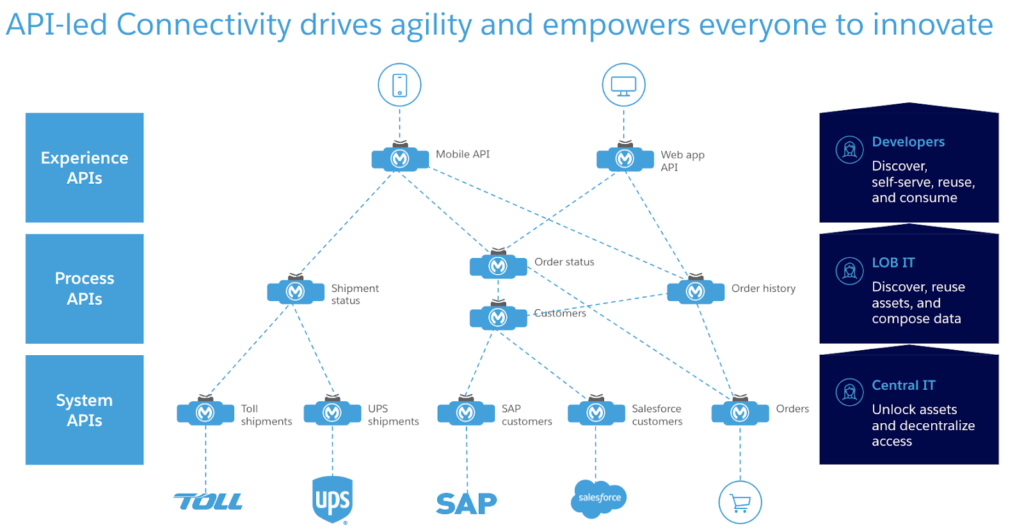
The most effective API integration services are built on an API-led connectivity model. This approach structures integrations into reusable layers, enabling agility and scalability across the entire enterprise.
The Three Layers of API-Led Connectivity
- System APIs — Connect Your Core Systems
System APIs connect foundational enterprise platforms — ERP, CRM, legacy applications, databases, and third-party platforms. They abstract system complexity and provide secure, governed access to data and functions, so other teams can consume data without knowing the underlying system details.
- Process APIs — Orchestrate Your Business Logic
Process APIs sit in the middle layer, combining multiple system APIs to enable end-to-end business workflows. Think: order processing, customer onboarding, billing cycles, and inventory management — all automated and orchestrated through a single process API.
- Experience APIs — Deliver to Every Consumer
Experience APIs sit at the top, delivering tailored data to specific consumers — web applications, mobile apps, partner portals, or internal business teams. They ensure each consumer gets exactly what they need, in the format they need it, at the performance they expect.
This layered approach lets enterprises build once and reuse everywhere, significantly reducing development time, integration costs, and long-term maintenance burden.
How API Integration Services Enable Intelligent Integration ?
API integration is no longer just about moving data from Point A to Point B. When combined with automation and AI capabilities, it becomes the foundation for intelligent integration.
Key capabilities modern API integration platforms like MuleSoft enable
- Real-time data availability for analytics, dashboards, and decision-making
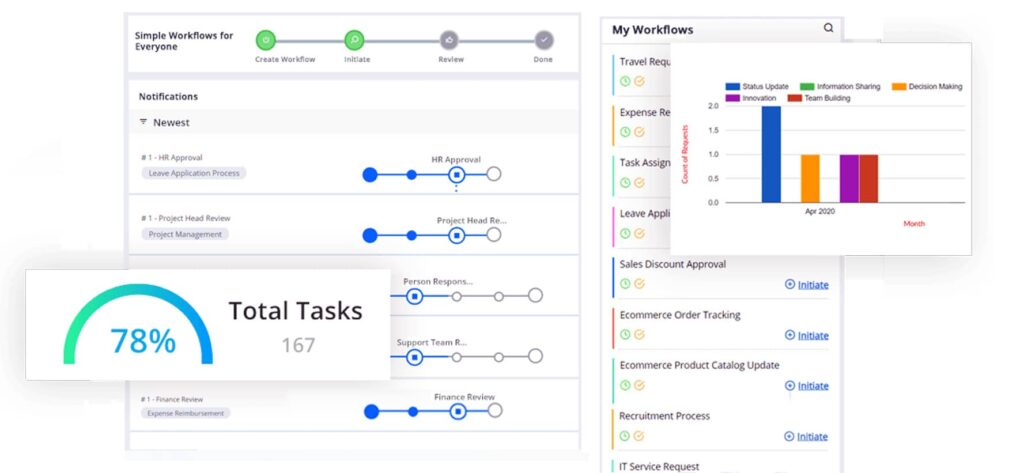
- Automated workflows triggered by business events and rules — no manual steps
- AI and machine learning readiness — clean, connected data is the foundation of every AI initiative
- Improved monitoring and observability — see what’s happening across every integration in real time
- Faster adaptation — change or add integrations quickly without rebuilding from scratch
API integration services enable enterprises to move from reactive, manual operations to proactive, data-driven execution — where the business runs itself. to proactive, data-driven execution.
API Integration and Legacy System Modernization!
Legacy systems continue to power mission-critical operations in many enterprises. Replacing them overnight is risky, costly, and often impractical.
API integration services offer a smarter path to modernisation:
- APIs wrap legacy systems without disrupting core operations
- New cloud and digital platforms can coexist with existing systems
- Modern user experiences can be built without rewriting backends
- Migration can happen incrementally and safely
This approach reduces risk while extending the value of existing technology investments.
Real Business Benefits of API Integration Services !
When implemented strategically, API integration services deliver measurable business outcomes:
Faster Time-to-Market New products and digital services launch faster when systems are already connected. No months of custom integration work before every release.
Reduced Operational Costs Automation replaces manual data entry, file transfers, and repetitive processes — cutting operational overhead significantly.
Improved Business Agility Connected systems respond to market changes faster. Add a new sales channel, onboard a new partner, or launch in a new region — without rebuilding integrations.
Better Customer Experiences Real-time, consistent data across CRM, ERP, and customer platforms means customers get accurate information, faster responses, and seamless experiences.
Higher ROI From Existing Systems Integration unlocks the value of applications you’ve already paid for — rather than replacing them with expensive new platforms.
Integration becomes a growth enabler rather than an IT bottleneck.
Industry Use Cases for API integration for enterprises
API integration services deliver value across industries:
Manufacturing
- Connected ERP, MES, and IoT systems
- Real-time production and supply chain visibility
- Reduced downtime and improved planning
Retail & eCommerce
- Unified customer and inventory data
- Seamless omnichannel experiences
- Faster order fulfilment and personalisation
BFSI
- Secure and compliant data exchange
- Automated onboarding and KYC workflows
- Faster approvals and improved customer trust
Healthcare
- Interoperable patient records
- Integration across clinical and administrative systems
- Improved care coordination and data accuracy
Logistics & Transportation
- Real-time shipment tracking
- Automated partner and carrier integration
- Improved delivery predictability
Across industries, API integration services enable efficiency, transparency, and scalability.
Best Practices for Successful API Integration solutions
To maximise value from API integration services, enterprises should:
- Design APIs Around Business Capabilities, Not Systems Don’t model your APIs on how your database tables are structured. Model them around how the business thinks orders, customers, products, shipments.
- Prioritise Security and Governance From Day One Implement OAuth 2.0, JWT, and API security policies before going live not after a breach. Use an API gateway like MuleSoft Flex Gateway for centralised policy enforcement.
- Build Reusable APIs to Eliminate Duplication Every API built for one project should be reusable by the next. This is the core principle behind API-led connectivity and the primary source of long-term ROI.
- Monitor Performance and Usage Continuously Use MuleSoft Anypoint Monitoring or equivalent tooling to track API latency, error rates, and usage patterns. Catch issues before they impact the business.
- Align Integration Strategy With Business Outcomes Every integration project should be traceable to a business goal faster onboarding, reduced costs, improved customer satisfaction. If it can’t be measured, it’s hard to prioritise.
For a deeper view of enterprise-level planning, governance, and operating models, read our enterprise API integration strategy guide. - Use Pre-Built Accelerators Where Possible Don’t build standard integrations from scratch. Integration accelerators for common systems (Salesforce, SAP, NetSuite, ServiceNow) can reduce project timelines by 30–50%.
Choosing the Right API Integration Partner !
Successful integration requires more than technology. It requires experience, architectural expertise, and a deep understanding of enterprise complexity. Working with experienced API integration experts ensures your integration strategy is scalable, secure, and aligned with your long-term business goals.
When selecting an API integration partner, look for:
- Multi-platform expertise: MuleSoft, Boomi, TIBCO, Workato — not locked into one vendor.
- Strong API governance and security practices: Ask for their security framework.
- Experience with cloud, hybrid, and legacy systems: Not just greenfield projects.
- Industry-specific accelerators: Pre-built assets that reduce your timeline and cost.
- Outcome-driven delivery: Fixed-scope engagements with clear milestones, not open-ended T&M.
- Long-term managed support: Someone to call when something breaks at 2 a.m.
The right partner helps you integrate with confidence and scale sustainably.
As a trusted API integration company, ProwessSoft provides strategic API integration consulting and enterprise-grade implementation services that help businesses connect applications, automate workflows, and accelerate digital transformation.
We bring certified expertise across MuleSoft, TIBCO, Boomi, and Workato, with delivery teams across the USA, India, and Singapore.
We’ve delivered 100+ enterprise integrations across manufacturing, healthcare, BFSI, and retail, helping organizations modernize legacy systems and build scalable API ecosystems.
Explore our integration accelerators →
The Future of API Integration Services
As enterprises move toward AI-driven and autonomous operations, API integration will play an even more critical role. APIs will become the foundation for:
- Intelligent automation and AI agent orchestration, where AI agents use APIs to take actions across systems
- Event-driven and real-time architectures, where integrations react to business events as they happen
AI-powered MCP servers and model integrations, connecting LLMs to enterprise data via secure APIs
API System integration services are no longer optional they are essential for building resilient, future-ready enterprises.
Final Thoughts
Digital transformation succeeds when systems, data, and processes work together seamlessly.
API integration services provide the connectivity, flexibility, and intelligence required to make that happen.
In a connected world, integration is not just infrastructure — it is strategy.

Editor: Pranavi Dharma
Frequently Asked Questions:
API integration services enable applications, platforms, and systems to communicate securely via APIs — allowing seamless data exchange and workflow automation across the enterprise. Rather than building fragile point-to-point connections, professional API integration services use governed, reusable API layers
Most projects take 6–16 weeks depending on system complexity, number of integrations, and platform. Using pre-built integration accelerators can reduce timelines by 30–50%.
The most widely used enterprise integration platforms are MuleSoft Anypoint Platform, Dell Boomi, TIBCO BusinessWorks, Workato, and SnapLogic. The right choice depends on your existing technology stack, team skills, and business requirements.
Yes. APIs can wrap legacy systems — exposing their data and capabilities to modern platforms — without replacing or disrupting the underlying system. This is one of the most common and valuable use cases for API integration in enterprises.
API-led connectivity is an integration architecture developed by MuleSoft that organises APIs into three reusable layers — System, Process, and Experience — enabling enterprises to build once and reuse across multiple projects and teams.
When implemented correctly — with OAuth 2.0, API gateway policies, encryption, and continuous monitoring — API integration services provide highly secure, auditable, and compliant data exchange across enterprise systems.
Connected, clean, real-time data is the prerequisite for every AI and ML initiative. AI-powered integrations use APIs to feed models with live enterprise data, and MuleSoft Agent Fabric enables AI agents to act across enterprise systems through secure API calls.
Yes. Prowesssoft’s managed integration services include 24/7 monitoring, incident response, performance optimisation, and platform upgrades — so your integrations stay healthy long after go-live.